Hale & Hush
Rare C Serum
Rare C Serum
Couldn't load pickup availability
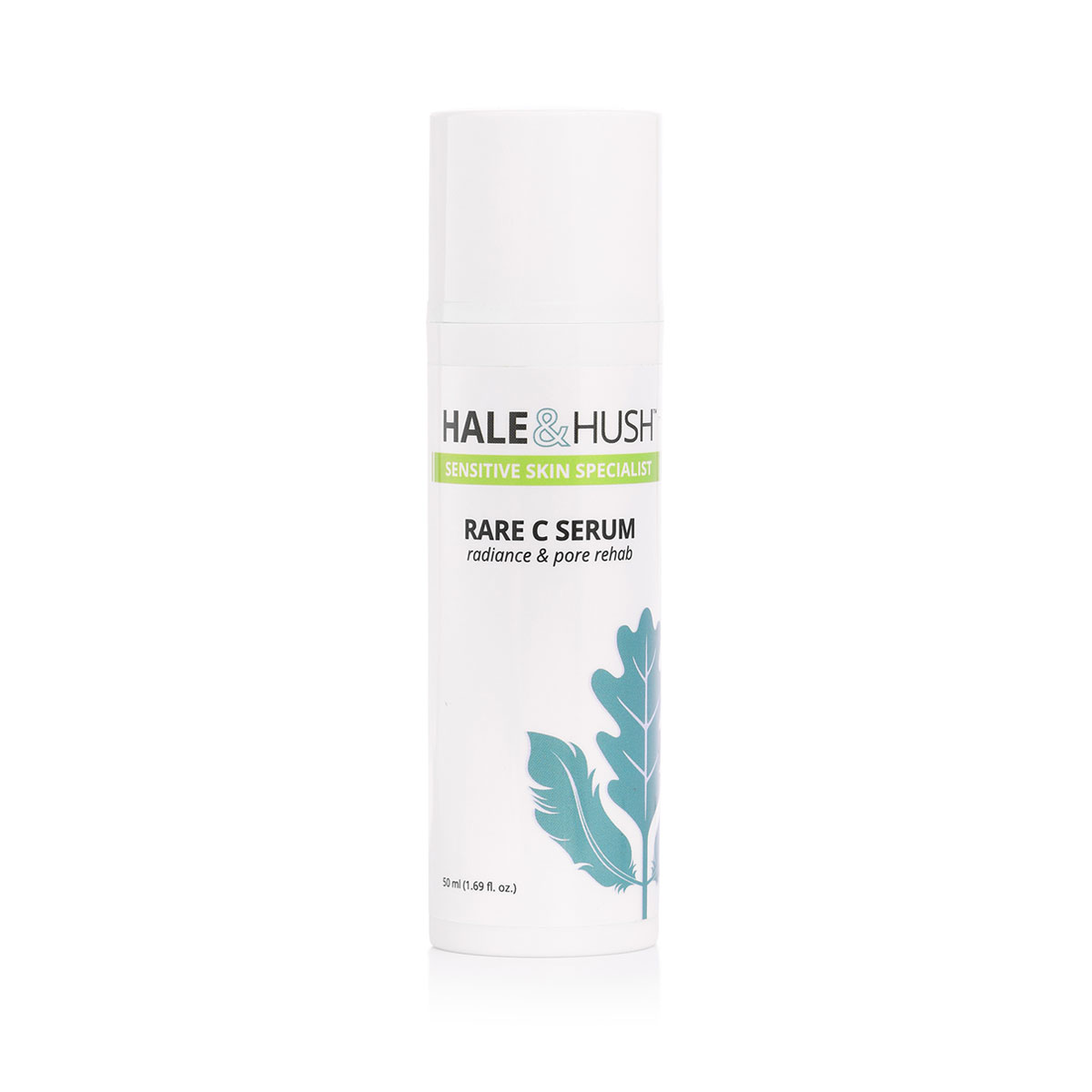
Hale & Hush Rare C Serum. Size: 1.7 oz.
Product Description
The most highly bio-available form of Vitamin C, Rare C Serum is brilliantly skilled at strengthening collagen, brightening the complexion, and, as a bonus, it’s able to reduce the appearance of pore size by 20% in just four weeks! This serum also fights against aging, protects against environmental damage, and helps repair collagen and elastin integrity. When used regularly, Rare C Serum will promote and enhance supremely radiant, strong, and youthful-looking skin. A vitamin C product is as rare and significant as the skin!
BENEFITS
• Reduces the appearance of fine lines, wrinkles, and pores.
• Strengthens collagen and enhances collagen synthesis.
• Soothes, replenishes, and hydrates skin.
• Balances, evens, and brightens skin tone.
3-0-Ethyl Ascorbic Acid (L): 3-0 Ethyl Ascorbic Acid (L), chirally correct, is a derivative of Ascorbic Acid with hydrophilic and lipophilic properties. 3-O-ethyl ascorbic acid is a very potent form of Vitamin C. It is one of the most stable forms, enabling it to penetrate the deeper layers of the skin without irritation. As a huge antioxidant, it brightens skin tone, fades hyperpigmentation, decreases melanin formation, protects the skin from oxidative stress, increases collagen production, and maintains the activity of immune cells in the epidermis. It is also anti-inflammatory, improves skin elasticity, and helps control trans epidermal water loss.
Lysophosphatidic Acid: Lysophosphatidic Acid is derived from phosphatidylcholine, which is a class of essential phospholipids involved in membrane-mediated cell signaling within the body. Topically, Lysophosphatidic Acid stimulates cell differentiation, improves keratinization, and limits parakeratosis (inflammation disrupts these processes, often leading to irregular skin growth). It not only regulates skin function but also plays a significant role in hair follicle development, skin wound healing, pruritus, skin tumors, and scleroderma. It supports cell proliferation, skin inflammatory responses and wound healing, and skin barrier function. This acid is also moisturizing while reducing irritation and redness for sensitive skin.
Sodium Hyaluronate (L) (Hyaluronic Acid): Sodium Hyaluronate (L) (Hyaluronic Acid), chirally correct, is a naturally occurring glycosaminoglycan found throughout the body’s connective tissue. It has been proven to moisturize the skin by attracting moisture in skin cells, which reduces dryness and flaking by increasing skin hydration. It can also provide structure and volume to the skin, reducing the appearance of fine lines and wrinkles, leaving the skin plump. Sodium Hyaluronate can also reduce skin inflammation, playing a vital role in wound healing processes by promoting cell migration and proliferation. It is excellent for treating skin irritation like eczema, psoriasis, and dermatitis stemming from a compromised barrier.
Beta-Glucan (D): Beta-glucan (D), chirally correct, is a polysaccharide sugar that can be derived from various natural sources such as yeast, fungi, seaweed, or oats. It is commonly used as a soothing agent and is considered an excellent ingredient for minimizing redness and other signs of sensitive skin. Beta-glucan acts as a humectant, attracting moisture to the skin, while supporting immune response to inflammation, damage, and infection. Beta-glucan also offers antioxidant properties that help to heal wounds, reduce the appearance of fine lines and wrinkles, improve skin texture, and enhance skin elasticity.
Share